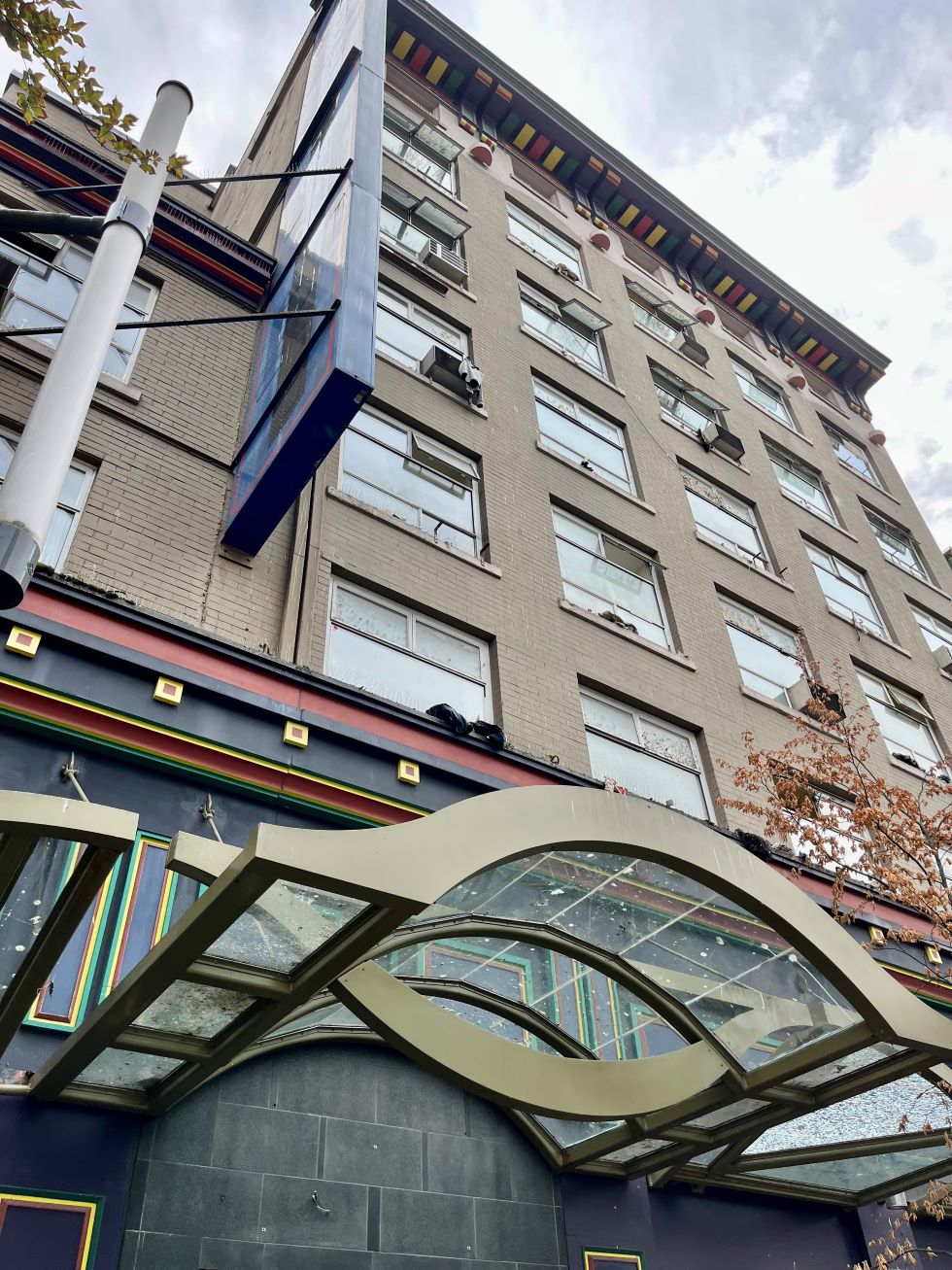
Living with Addiction - Dallas's Story
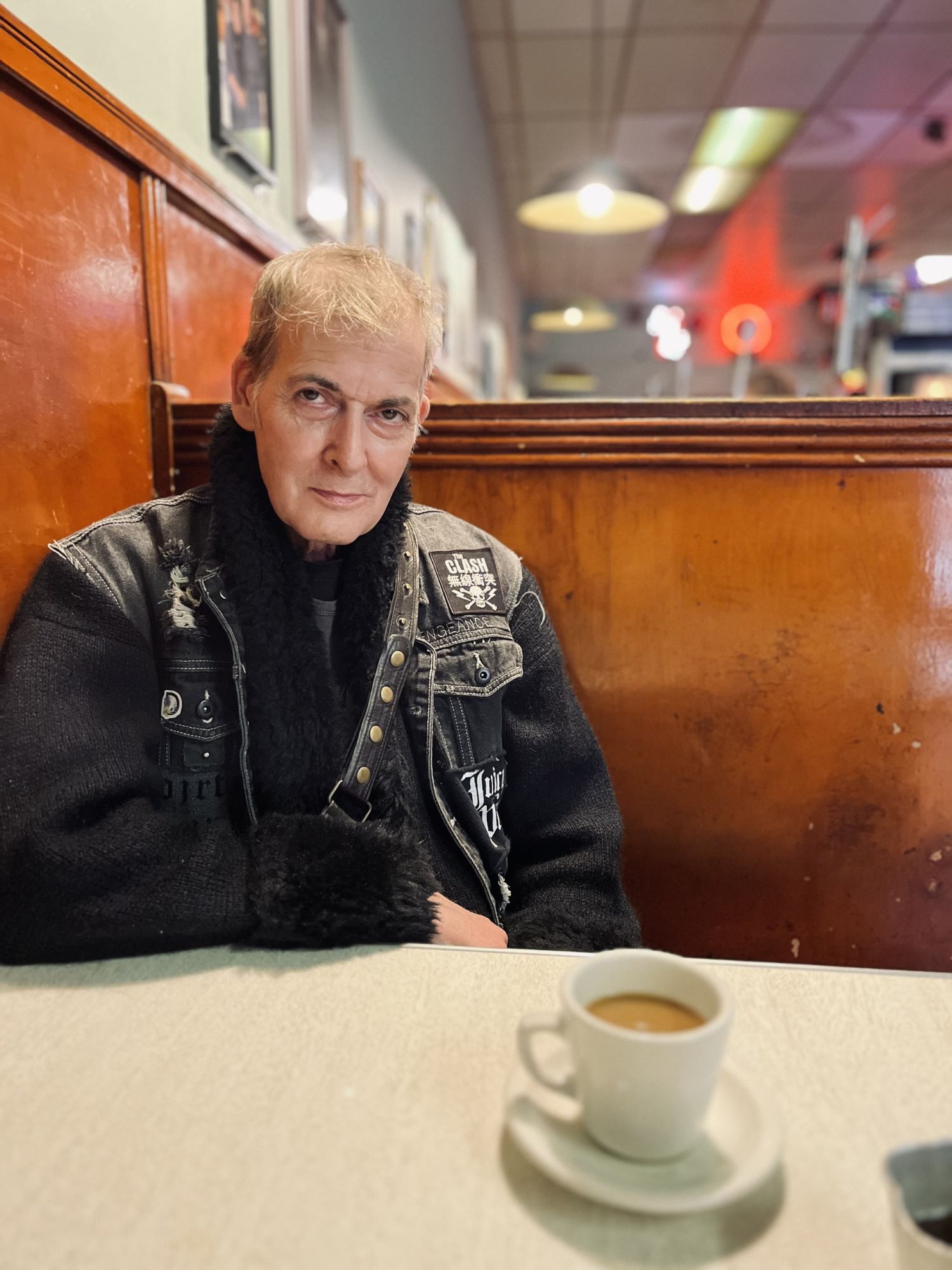
Dallas recently moved from Dodson Rooms into a newly built private market apartment with his boyfriend, Jesse. The move, Dallas says, “has made a huge difference” to his mental health.
Dallas is in his late fifties. He uses fentanyl daily, an addiction he continues to live with. He also keeps a tidy home, takes care of his responsibilities and paints the most beautiful paintings. His relationship with Jesse and his creative work give him things to look forward to.
Dallas grew up in Winnipeg and moved to Vancouver at 21. He worked in fashion for more than 25 years, a career that included trips to Toronto and New York City. There was a social life that came with the industry too: drinks after work, parties and cocaine.
Dallas has a long struggle with alcohol addiction, but his cocaine use was recreational, something he did on weekends. Gradually, though, he began using cocaine every day, then switched to crack, which offered a shorter, more intense high. At one point, he was spending upwards of $100 a day on it.
Dallas eventually stopped using crack. He describes that addiction as more psychological than physical. His tolerance had grown, the effects no longer justified the cost and he felt his body had reached its limit.
Just before the pandemic, Dallas took time away from work to recover from burnout. His mental health was suffering. He travelled for a while, then started running out of money.
Around this time, he tried fentanyl for the first time. It's a decision he now regrets.
Dallas lost the small guest cottage on Point Grey Road where he had been living. He stayed in several SROs in the Downtown Eastside before arriving at Dodson.
At first, he thought supportive housing would be temporary. He'd get back on his feet in a few months, then move on. Instead, he stayed for five years, and his fentanyl use became an entrenched part of his life.
In his final year at Dodson, two things happened that helped change his circumstances.
The first was reconnecting with Jesse, whom he had known many years earlier. Jesse was living on the street and having a difficult time, and Dallas wanted to help him. Jesse eventually moved in, and with a place to stay, his life began to stabilize. Their friendship became a relationship.
The second was meeting Nata, a member of Community Builders’ Outreach team. With Nata’s help, Dallas and Jesse secured their new one-bedroom-plus-den apartment, along with a rental subsidy that makes the $1,700 price tag possible.
Our Outreach team works one-on-one with shelter and supportive housing residents across Community Builders' housing portfolio to help them identify next-step housing goals, navigate the housing process, get access to subsidies and housing set-up supports and maintain tenancies through the first 12 months in their new living arrangement.
Dallas has been to rehab three times, each time for alcohol. He no longer drinks, but he is unsure whether a life entirely free of addiction is realistic for him.
“Addiction is a bitch,” he says.
He remembers alcohol withdrawal as an intensely physical experience: shaking, violent illness and hallucinations. Some of the treatment settings he attended felt more welcoming than others. He describes places where limited resources and a cold, utilitarian atmosphere made an already difficult experience feel worse.
“I felt like a horrible person in there,” he says.
Dallas believes detox and treatment services are essential and need more government funding. He also wants people to understand that addiction doesn't always end after a stay in rehab. In his experience, the expectation that someone can get sober once and remain that way for life leaves little room for how complicated recovery can be.
For now, Dallas focuses on keeping his life manageable. He uses fentanyl daily in amounts he describes as small, and he makes a point of taking care of his responsibilities earlier in the day before using. He calls it a functional life.
This doesn't mean fentanyl has been without consequences. Dallas experienced an overdose while living in the West Hotel and credits a friend with saving him. The friend had come to say hi and by coincidence, Dallas had forgotten to lock the door to his unit, an unthinking accident that might have saved his life. He recalls a sensation of hovering above his own body before paramedics arrived.
The experience left him more aware of the danger. He says he's become more cautious about how much he uses since then, though he knows the risk remains.
His addiction may always be part of his daily life, but with his new home he's found somewhere to care for himself, to make his art and to share a life with Jesse.
This article is hosted on an external website.